





TEMPORARY EXHIBITION
Amarelinha
Did you know that the Brazilian national team didn’t always wear yellow? White was the main color of our uniforms until we were defeated in the 1950 final against Uruguay at Maracanã Stadium, which prompted a change in colors. The story of the iconic “yellow jersey” is told in the Football Museum temporary exhibition Amarelinha, which is part of the institution’s special initiatives for this year FIFA Men’s World Cup.
Dates
May 22, 2026 to September 7, 2026
Hours
Tuesday through Sunday
9 a.m. to 6 p.m. (last admission at 5 p.m.)
Every first Tuesday of the month, until 9:00 PM (last admission at 8:00 PM)
Tickets
R$ 25.00 Full Price
R$ 12.50 Half-price
Free for children 7 and under
Free for everyone on Tuesdays
Pick up directly at the box office or via the Sympla website.
How to get there
Click here to view different transportation options
Collections in play
Amarelinha revisits the journey of a symbol that left the football field to become part of Brazilian culture and a global icon, showcasing 18 jerseys from legendary players such as Sócrates, Rivellino, Ronaldo, and Vini Jr. The exhibition features jerseys from idols who played over the past 70 years and is an opportunity to foster dialogue among various generations of Brazilian football fans.
Curated by journalist Marcelo Duarte and the team at the Brazilian Football Reference Center (a division of the Football Museum dedicated to research and collections), the displays feature items on loan from five jersey collectors: Marcelo Monteiro, Thiago Succar, Salomão Furer Jr., Cássio Brandão, and Rodrigo Viana.
Sweaty, worn, and prepared
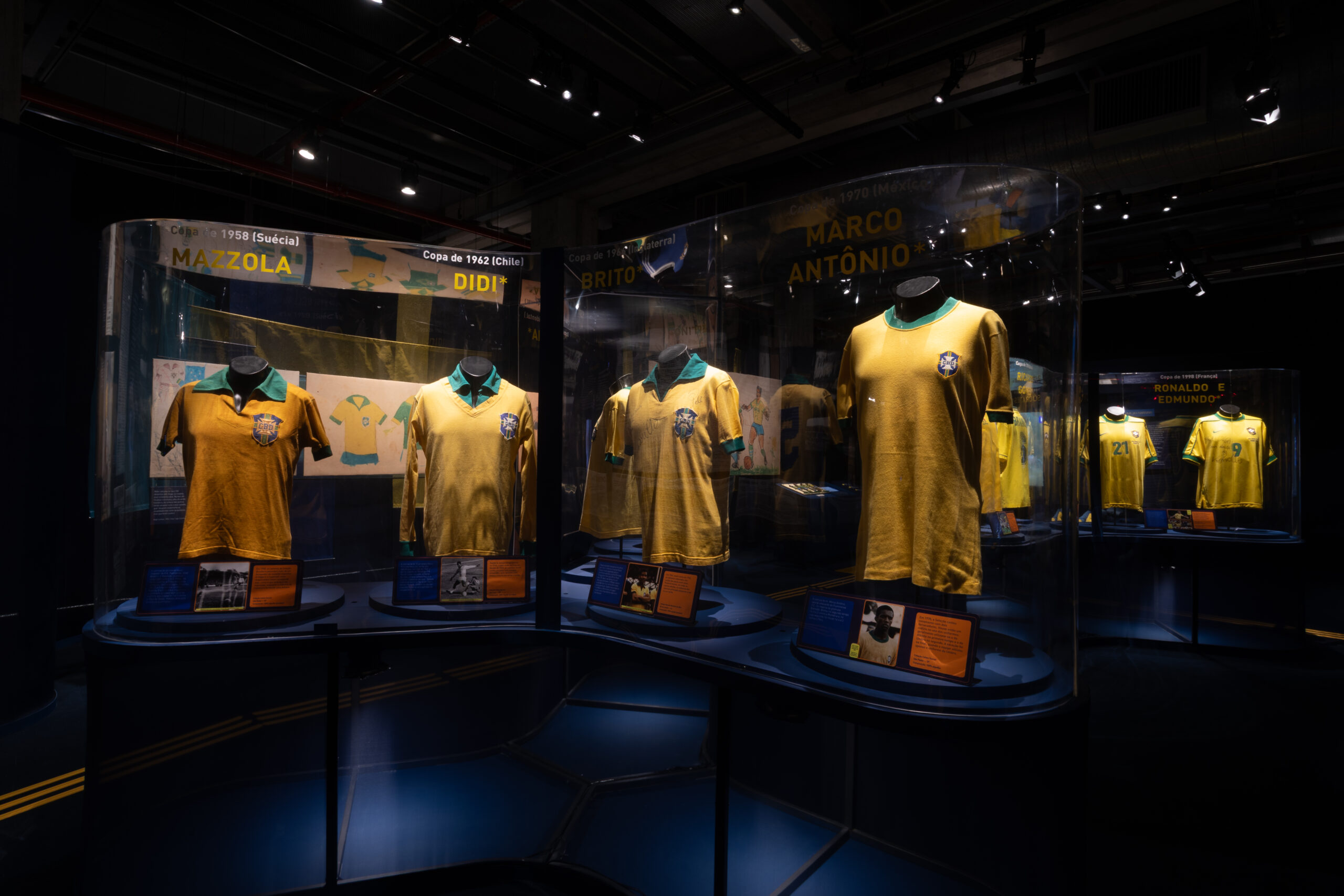
The jerseys selected for the exhibition were actually worn in World Cups between 1958 and 2022. There are “sweaty jerseys,” which were worn by players who took the field; “worn jerseys,” which were worn by players who remained on the bench; and “prepared jerseys,” apparel that was only brought to the tournament. Uniforms worn by Vinícius Jr. in the 2022 World Cup quarterfinals and by Didi, the 1962 World Cup champion, are on display, as well as jerseys worn by legends such as Sócrates, Ronaldinho Gaúcho, and Rivellino, among others.
The jersey worn by Pelé in the 1970 World Cup final against Italy, when Brazil became three-time champions, has been put back on display, especially for this temporary exhibition. This piece, which is part of the Museum’s collection, will return to the display case specially built for it in the Pelé Room, an area that pays tribute to the “King of Football” in the Museum’s main exhibition. Next to it, in another display case, will be displayed an 1994 Brazilian National Team jersey autographed by the players who secured Brazil’s fourth World Cup victory, celebrating one of the greatest achievements in Brazilian football history.
Materiality and Preservation
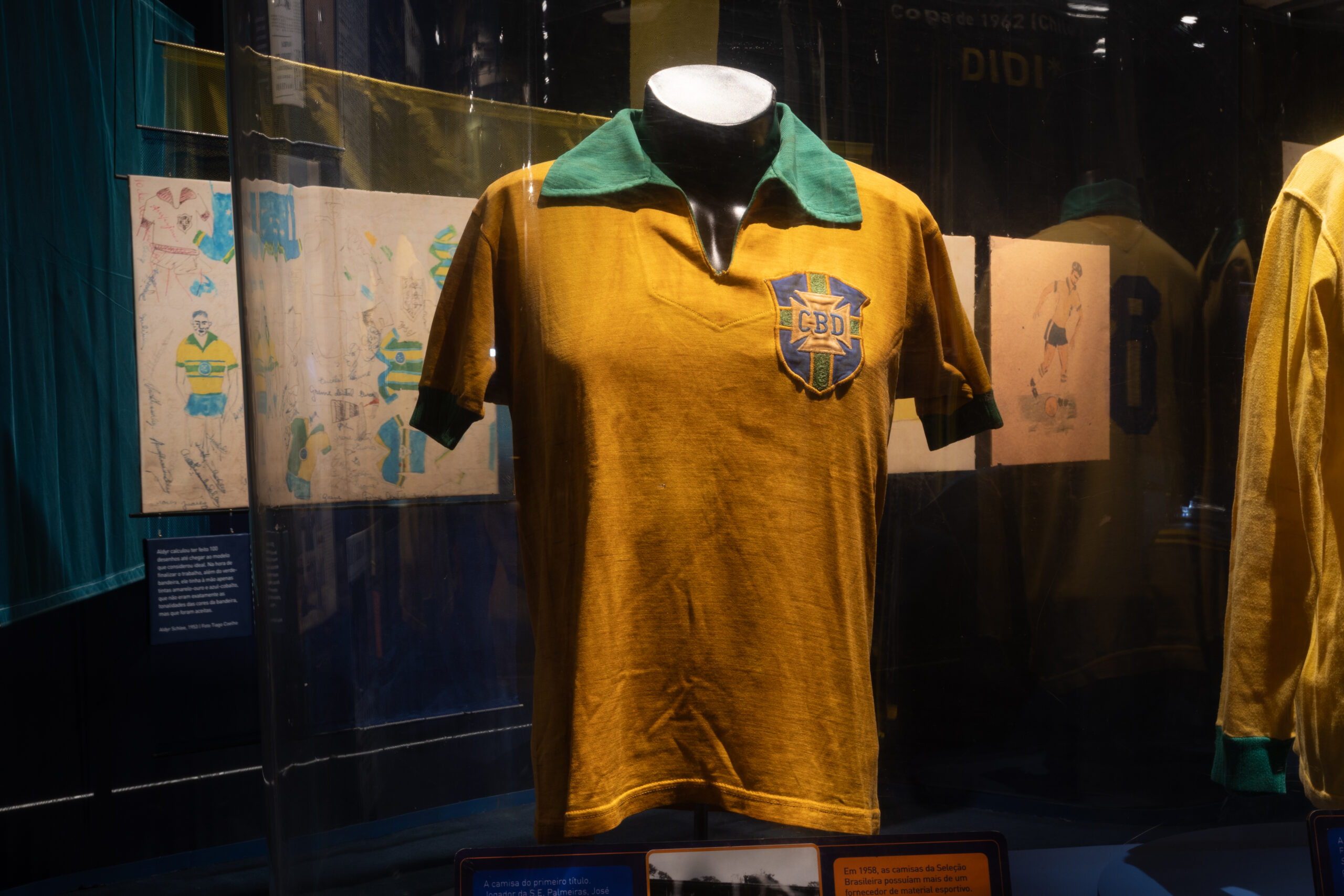
Amarelinha aims to highlight the value of jerseys, both for what they symbolize and for their materiality, as well as the issues related to their manufacture, use, collection, preservation, and conservation – an ongoing, multifaceted endeavor involving techniques and professionals from various fields.
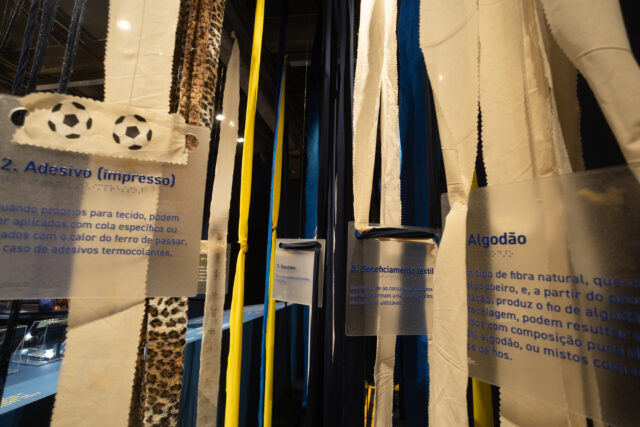
Thus, the exhibition features sections dedicated to showcasing the fabric. There is a textile glossary illustrating various types of weaves and finishes, a timeline tracing the evolution of shirt-making techniques, and a tactile shirt that visitors can touch.
“AMARELINHA IS A UNIQUE OPPORTUNITY TO LOOK AT THE BRAZILIAN NATIONAL TEAM’S SHIRT BEYOND THE SYMBOL. EACH PIECE TELLS STORIES ABOUT GAMES, ATHLETES, FANS, DESIGN, AND TEXTILE TECHNOLOGY. IT IS AN INVITATION TO OBSERVE THEM AS MUSEUM ITEMS, IN ALL THEIR LAYERS: MEMORY, INFORMATION, AND MEANING.”
Marília Bonas, Technical Director of the Football Museum
History
The exhibition also presents the history of the creation of the yellow jersey: after Brazil’s defeat by Uruguay in the 1950 World Cup final at the Maracanã Stadium, the Brazilian Sports Confederation (CBD) and the newspaper Correio da Manhã launched a national contest to replace the white uniforms of the Brazilian national team. One contest requirement was that the new uniform incorporate the four colors of the national flag.
Aldyr Schlee, who ironically lived on the border between Brazil and Uruguay and had a soft spot for our Maracanazo tormentors, ended up designing the winning jersey. Schlee suggested using golden yellow on the jersey, along with a green collar and cuffs and cobalt blue shorts. White was incorporated into the socks. The exhibition showcases this entire story through Aldyr’s drawings, as well as interactive analog and digital experiences that present uniforms and interesting facts about several World Cup jerseys.
Interactivity
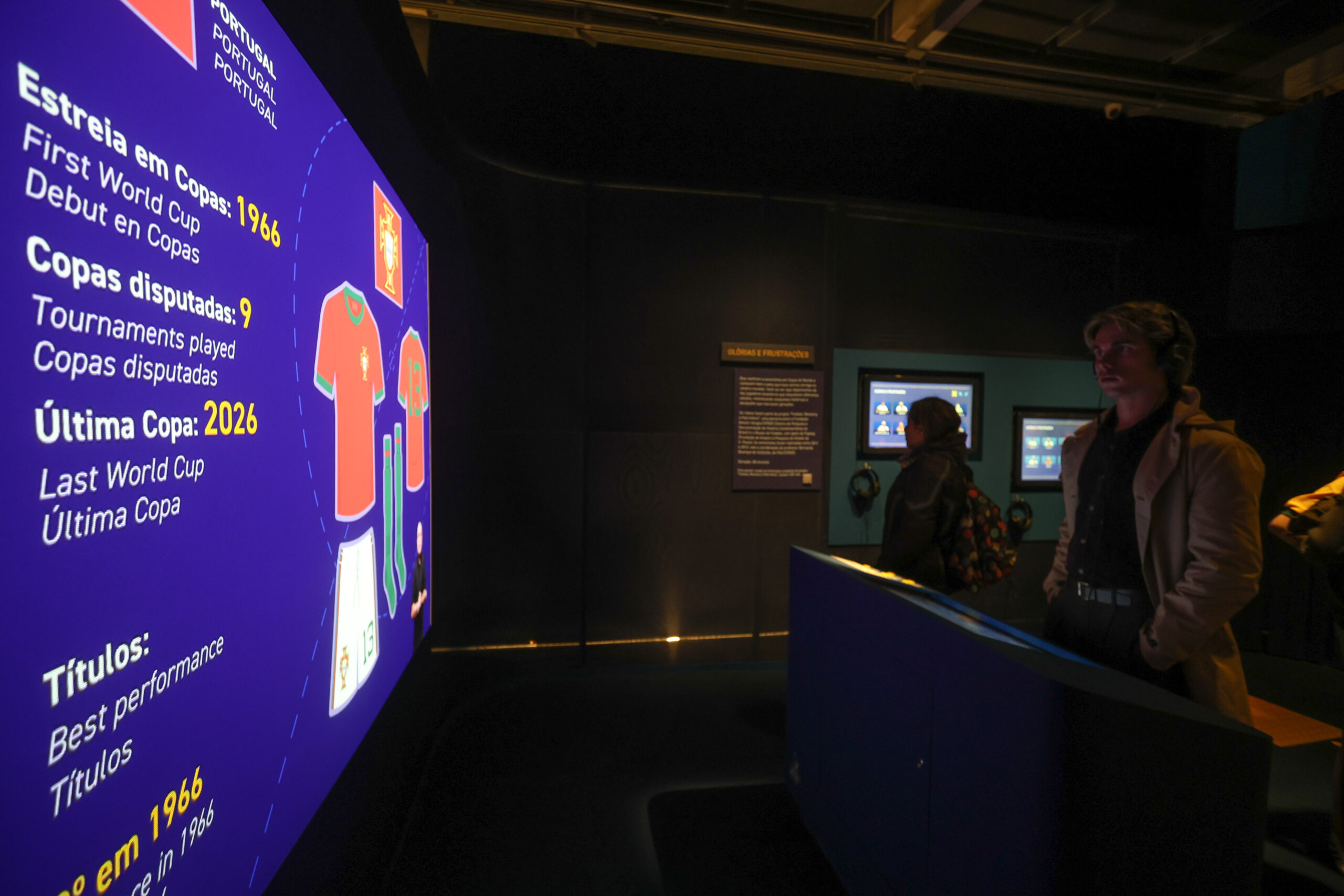
The interactive area of the exhibition invites visitors to participate in a simple and direct way. Using a touchscreen kiosk, they can select the content they wish to explore and follow along on the projection screen. There are two paths to choose from. One allows you to view profiles of all the national teams that have ever participated in World Cups. Each profile features illustrations of their uniforms and other relevant information. The other path lets you access a selection of trivia related to the most significant jerseys from past World Cup editions.
Visitors can learn stories about memorable matches, details about the players who wore the uniforms, and information about design changes over the decades. This content was developed in partnership with FutBox. The goal is to provide a dynamic experience that enhances visitors’ understanding of the items on display and connects them to the stories behind each jersey and national team.
The exhibition, section by section
Before the Yellow Jersey delves into the creation of the yellow jersey in 1953 after the white uniform was rejected following the 1950 World Cup. This section features documents, images, and a video about the design competition that Aldyr Garcia Schlee won. It also contextualizes the impact of the 1950 defeat on the development of this new symbol.
Jersey: Garment, Expression, Document brings together the exhibition’s 18 central pieces, offering a broader perspective on the jersey, beyond its sporting function. These pieces reveal identities, cultural contexts, and defining moments in Brazilian football. This section also features an installation exploring the world of textiles and a sensory table where visitors can use a digital microscope and tactile panels to observe the differences between fabrics such as cotton and polyester.
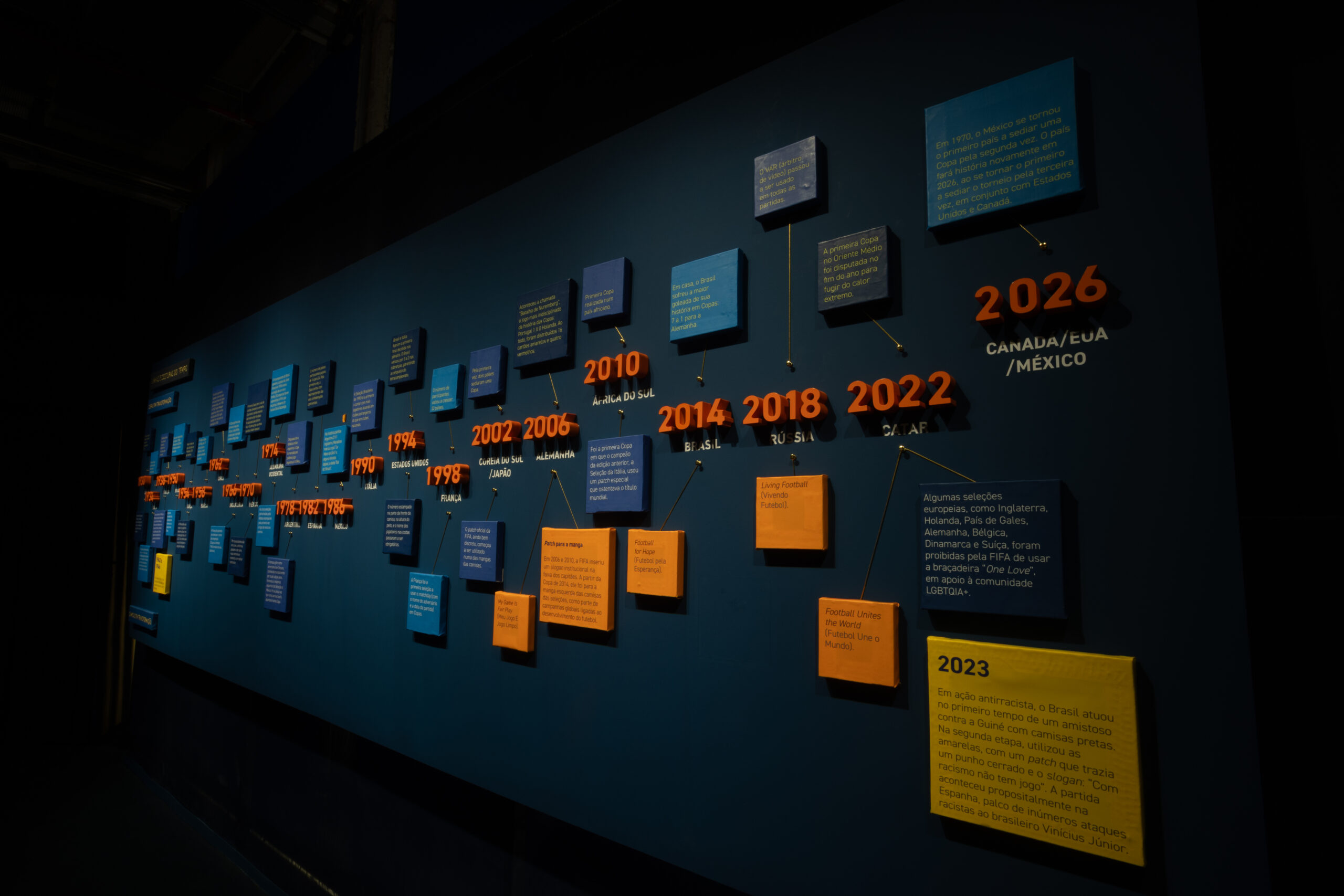
National Teams and World Cups presents a timeline that links the evolution of World Cups to the transformation of uniforms. This exhibit brings together trivia and information on the 84 national teams that have participated in the tournament, as well as player testimonials on the significance of the jersey across different generations.
Partners and sponsors
The temporary exhibition Amarelinha is presented with main sponsorship from Petrobras, sponsorship from Grupo Globo, Mercado Livre, Coca-Cola FEMSA Brasil, and Sabesp, and support from Farmacêutica EMS, Itaú, Arkema, Pinheiro Neto Advogados, Universidade Santo Amaro, Goodyear, Shopping Cidade de São Paulo, and Adidas. The museum is part of the São Paulo State Government’s Department of Culture, Creative Economy and Industry and the Ministry of Culture, through the Rouanet Law.
Gallery
Technical file
Curator
Marcelo Duarte
Production coordination
Cristiane de Almeida | Maíra Corrêa Machado
Production
Flávio Benatti e Vinícius Amaral
Production assistants
Andresa Muniz e Paula Toledo
Design
Pandoala | Tissa Kimoto e Laura Brandão
Expographic Design
Thereza Faria e Matheus Bauer (assistant)
Textile research
Laiana Silveira | Letícia Marcolan | Sibelle Barbosa
Licensing
Fabiana Neves | Dóris Régis
Textile consultant
Teresa Cristina Toledo de Paula
Lighting design
Fernanda Carvalho
Research, illustrations, icons and multimedia design
Adriano Ávila | FUTBOX
Video editing
CKF Produções | Cris Fukuyama
Embroidery
Fashion Couture
Text review
Marca-Texto | Fabiana Pino
Translations
Agência Dica
Art hadling
Black Art Handler
Audiovisual equipment
On Projeções
Lighting equipment
Maxi Tecnologia para Eventos
Aldyr Schlee’s collection reproduction
Tiago Coelho
Fabric and display scenography
Duzzi Cenografia
Woodworking
Metro Cenografia
Props and furniture
Jack Produções | Ulisses Marchetti
ACCESSIBILITY PROJECT
Débora Henrique de Oliveira, Emerson Prata and Flávio Benatti
Sign language and audiodescription scripts
Mais Diferenças
Tactile images
Inclua-me
Maps and tactile floor
Wat Acessibilidade
Acknowledgments
Aldyr Rosenthal Schlee; Andrey Rosenthal Schlee; Ana Candida Moura; Ana Carolina Mariano Dimitruk; Ana Claudia Mazzoli Boni Calderon; Angélica Brito; Antônio José Pádua de Oliveira Bulgarelli; Athleta; Bianca Matsusaki; Bruna Caetano Teixeira; Bruna Sandrini; Caio Infante; Cancha F.C.; Cecilia Alberton Coutinho Silva; Eduardo Saron; Gabriela Oliveira Dos Santos; Henrique Rost; Jhonathan Pereira Sousa; João Alegria; Jullia Guedes; Karine Stephanie Alves; Leticia Baumann; Ligia Vannucci; Mauro Silva; Michelle Lima; Nara Patrícia Alves; Paulo Antônio Pádua de Oliveira Cunha; Rafael Klafke; Rafael Silva de Oliveira; Ricardo Rodrigues Ramos; Roberta Deodato Motta; Rodrigo Antonio da Silva; Sylvia Rosenthal Schlee; Thiago Dib Bulgarelli.
Every effort has been made to locate the copyright holders of the works and images reproduced here. In case of any omissions and/or corrections, please send us an email to: crfb@museudofutebol.org.br
